︎ Growing Health at Home
Designing Everyday Wellness for the Elderly
By Pruthvi Shah ︎


Hypothesis
If small manufactured homes and their surrounding neighborhoods are redesigned as health-centered environments that encourage nutritious eating, physical activity, and social engagement, then older adults with limited mobility will be able to live more independently and experience improved overall well-being.
If small manufactured homes and their surrounding neighborhoods are redesigned as health-centered environments that encourage nutritious eating, physical activity, and social engagement, then older adults with limited mobility will be able to live more independently and experience improved overall well-being.
- Why
Limited mobility, poor walkability, and scarce fresh food make healthy diet and activity difficult for an older woman in a small manufactured home.
- How
By applying point-of-decision design at multiple scales—home, porch, garden, healthy options are made visible and accessible. They create everyday cues that encourage her to eat well, move more, and connect socially.
- What
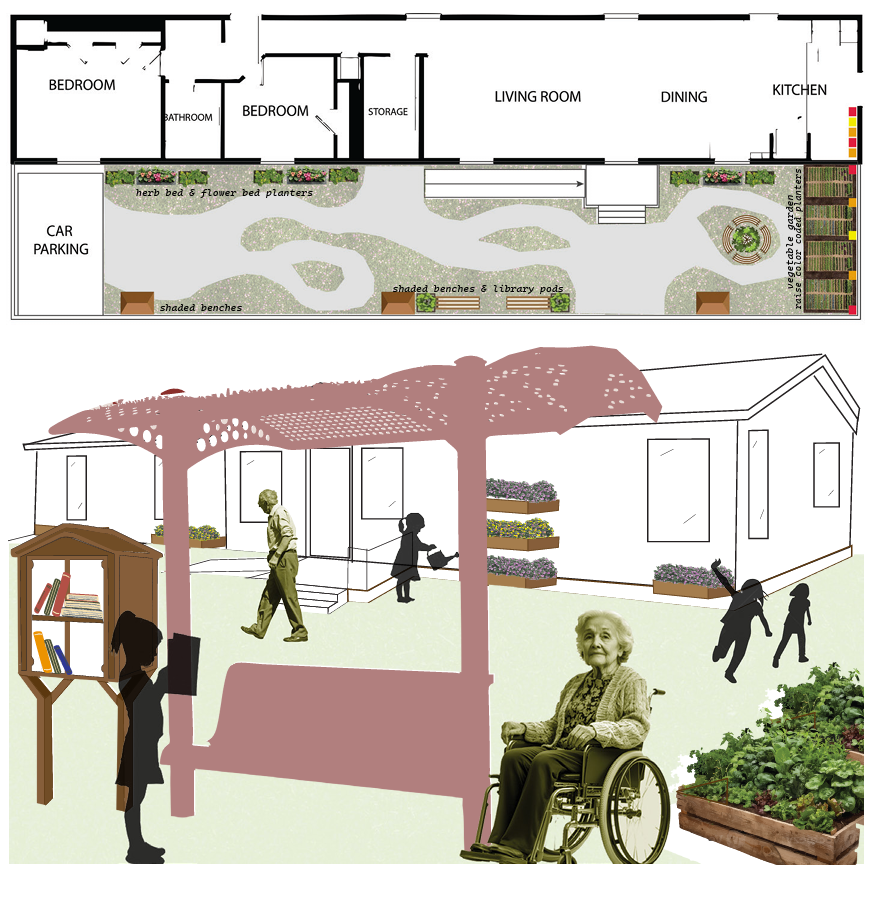
Design interventions include raised community garden beds, a porch with edible planters, a walking loop with shaded story benches, with small library stand. Creating accessible, supportive, and joyful health-centered environments
- So What
With healthier meals, more movement, and social interaction, she can better manage diabetes, reduce complications, and improve mental well-being. At the same time, these interventions reduce carbon emissions, lower healthcare costs, and foster equitable, health-centered communities. for communication, connection, and belonging.
The Link Between Design and Outcomes
The idea is to see how small interventions shape daily decisions and longterm well-being. Through design elements such as raised garden beds, an edible porch, shaded benches, and a library stop at the bus shelter, everyday choices, whether selecting fresh produce, stepping outside, taking a short walk, or meeting a neighbor. Such enhance meaningful acts of care within society. These are not abstract design ideas but practical supports aligned with age, diabetes management, mobility challenges, and limited access to technology and transport. These supported choices lead to healthier meals, more daily movement, and reduced isolation. In turn, this improves diabetes management, lowers the risk of complications, and strengthens mental and social well-being. At a broader scale, such design interventions reduce healthcare costs, cut carbon emissions from car-dependent grocery trips, and foster more equitable community health, reflecting a health-by-design approach that prioritizes dignity, empathy, and social connection.
︎︎︎Download Growing Health at Home Poster