︎ Pathways to Health
Everyday Movement and Meals for All Ages
By Shweta Chawda ︎

Hypothesis
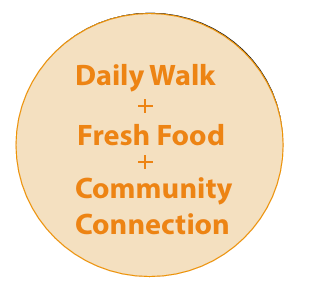
If Sean’s environment naturally supports movement and access to healthy food, then he will start making healthier choices without feeling like its extra work.
If Sean’s environment naturally supports movement and access to healthy food, then he will start making healthier choices without feeling like its extra work.
- Why
Sean lives in a low-income suburban apartment, struggles with scarce sidewalks, distant fresh food and isolation. Night shifts push him towards fast food, reflecting systemic barriers affecting Sean’s health and activity.
- How
By reimagining Sean’s daily errands and leisure, health slips naturally into his routine. Groceries become walks, markets become gathering places, and public spaces transform into environments that quietly promote well-being..
- What
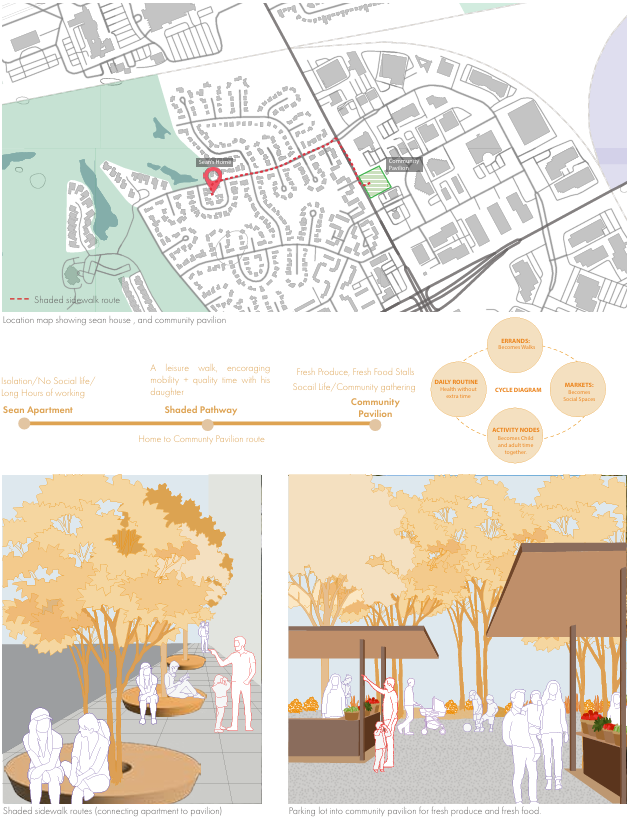
Designing, a community pavilion in neighborhood to host fresh produce, mobile market, shaded walking routes connecting apartments to pavilion. Tiny activity nodes near the food hubs for kids with adults. Fresh produce kiosk within 5-10 minutes of housing encouraging walking over driving.
- So What
Health becomes embedded in everyday routines, fostering physical activity, better diets and social connection without adding time and stress. Sean errands with Isabel become walks, meals from markets, and neighbors gather at shared spaces.
The Link Between Design and Outcomes
This design integrates food access, physical activity and social connection into Sean’s everyday life, transforming health from a separate goal into a natural outcome. For Sean, a single father working night shifts, every choice feels constrained by his environment, long drives for groceries, scarce sidewalks and few social spaces. This project reimagines those same daily routines- grocery shopping, walking, gathering -as pathways to health rather than barriers. The Community pavilion acts as a central hub where residents encounter fresh produce, mobile market participate in cooking demonstration, and neighbor meetups. Walking to market loops turns once car dependent errands into shaded welcoming walk. Activity nodes near food hubs allow kids, parents and seniors to move together, while produce kiosks close to housing make fresh food accessible without extra efforts. For Sean, errands with Isabel (daughter) become short walks rather than car rides. Fresh, affordable meals come from the pavilion, Senior strolls, children play, neighbor gather, the activity slips naturally into everyday life. By embedding food, movement and connection into ordinary routines, the design makes healthy choices easier and joyful. For residents like Sean, well being becomes not an added task but a seamless part of everyday life.
︎︎︎Download Pathways to Health Poster