︎ Community as Medicine
A Healthy Meal You Can Count On
By Dhvanil Pithava ︎

Hypothesis
If community gathering spaces are designed to integrate affordable healthy food options and subtle mobility cues, then individuals like Sean Gomez—working parents with Type 2 Diabetes in low-access suburban areas—will be more likely to make healthier dietary and lifestyle choices, leading to improved long-term health outcomes.
If community gathering spaces are designed to integrate affordable healthy food options and subtle mobility cues, then individuals like Sean Gomez—working parents with Type 2 Diabetes in low-access suburban areas—will be more likely to make healthier dietary and lifestyle choices, leading to improved long-term health outcomes.
- Why
Few spots are available for socialising, dining, or walking in suburbs. Sean’s isolation depletes his motivation, and his small home, tight budget, and night shifts encourage him to lead a sedentary lifestyle and eat cheap, unhealthy food.
- How
Design community nodes with gathering places, culturally priced food vendors, active urban features like walkways and play areas, community spaces and pointof-decision cues to help Sean eat healthier and move more in a supportive setting.
- What
Making healthy decisions can be a natural part of Sean’s everyday routine. Eating healthily, staying active, and interacting with others is made simple by plazas with shaded seating, walkways, and play areas; weekly markets featuring fresh produce and cooking demonstrations; and reasonably priced, diabetesfriendly food stalls at park entrances. Healthy food is kept affordable and accessible.
- So What
These changes help Sean grab healthy meals, stay active with Isabel, and connect with neighbors. Over time, he manages his diabetes more easily, builds healthier habits, and feels supported by a community making similar choices.
The Link Between Design and Outcomes
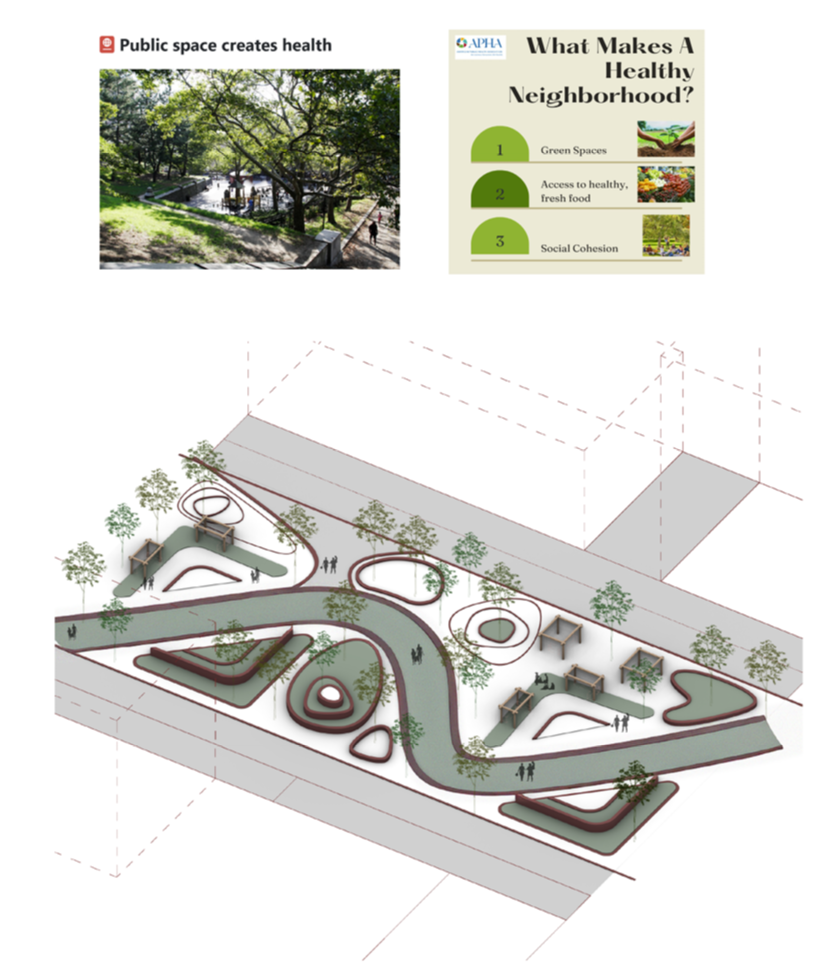
By reimagining suburban public space as a community health hub, the design transforms daily routines into opportunities for wellbeing. Healthy food kiosks, shaded walking paths, play areas, and family-friendly programs make diet and mobility social, accessible, and enjoyable. This project proposes integrated community nodes—plazas, parks, and weekly markets—that combine affordable, culturally sensitive healthy food with activity-friendly design. By placing healthpromoting choices at points of decision and embedding them in the daily rhythm of suburban life, these spaces make it easier for Sean and families like his to eat well, stay active, and connect with neighbors. [Food stalls organized along park entrances (like at Sanjay Gandhi National Park, Mumbai), so the point of entry =point of decision** for healthier snacking.] The intervention not only improves individual health outcomes but also fosters collective resilience, creates economic opportunities and cultivates a suburban environment where wellbeing is part of everyday life.
︎︎︎Download Community as Medicine Poster